
Infinity Live at TukTuk Wine and Dine, Negombo
On April 10, from 7 pm onwards, TukTuk Wine and Dine in Negombo hosted Infinity Live, welcoming a crowd of around 450 guests. Groups of friends and couples arrived steadily through the early hours, filling the space in layers rather than all at once. The atmosphere began forming almost immediately, shaped by movement between tables, early conversations, and the steady build of sound from the stage area as preparations moved toward the live performance.
From the start, the night did not feel like a waiting period. It felt active. Guests settled quickly, food and drinks started circulating, and different groups naturally began forming small pockets of interaction across the venue. Even before the music fully took over, the space already carried a sense of shared social momentum.
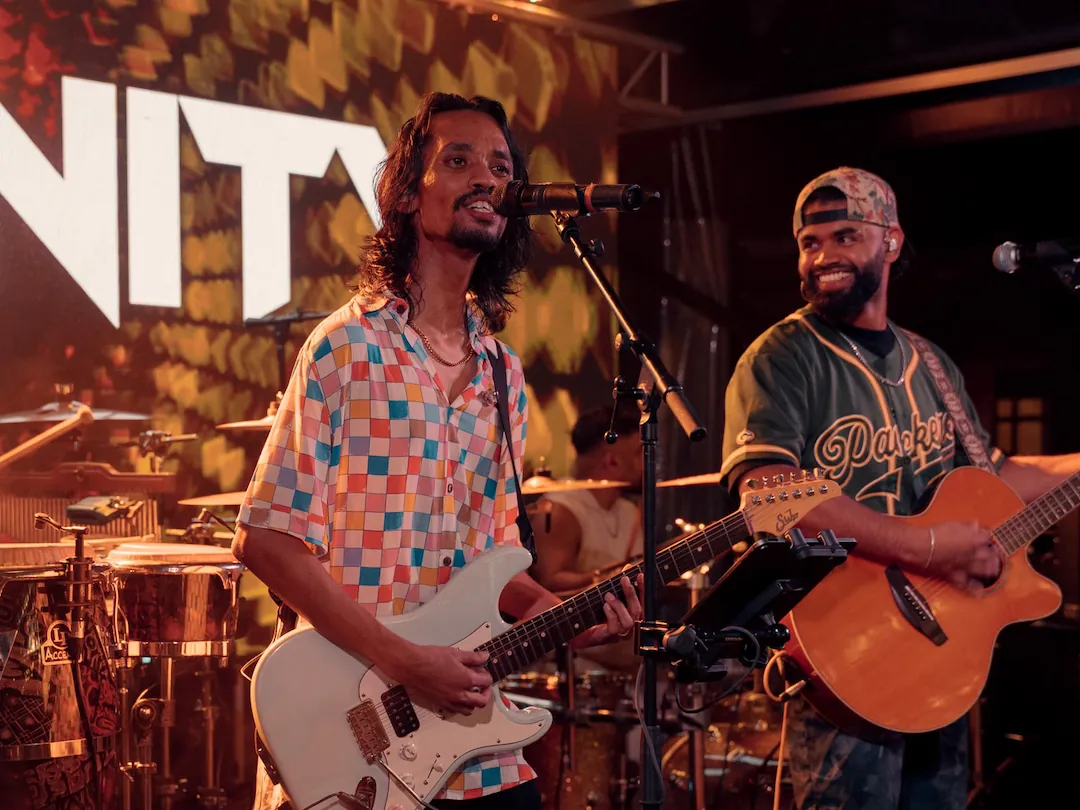
TukTuk as a Social Music Space
Throughout the night, TukTuk Wine and Dine functioned as a dense social environment where food, drinks, and live music existed together in one continuous flow. Tables were not static seating points. They acted as flexible social zones where groups shifted, expanded, and temporarily merged depending on the moment.
Food and drinks moved steadily across the venue, with guests eating in between songs and continuing conversations while engaging with the performance. Drinks were refilled during songs without breaking attention, and plates were shared across groups as people leaned in and out of conversations depending on the energy around them.
Tables often expanded beyond their original groups. Friends pulled others into their space, nearby groups joined briefly before returning to their own, and conversations stretched across seating areas. These interactions were not structured or planned. They happened naturally due to proximity and shared attention to the stage.
Infinity Live and First Performance at TukTuk
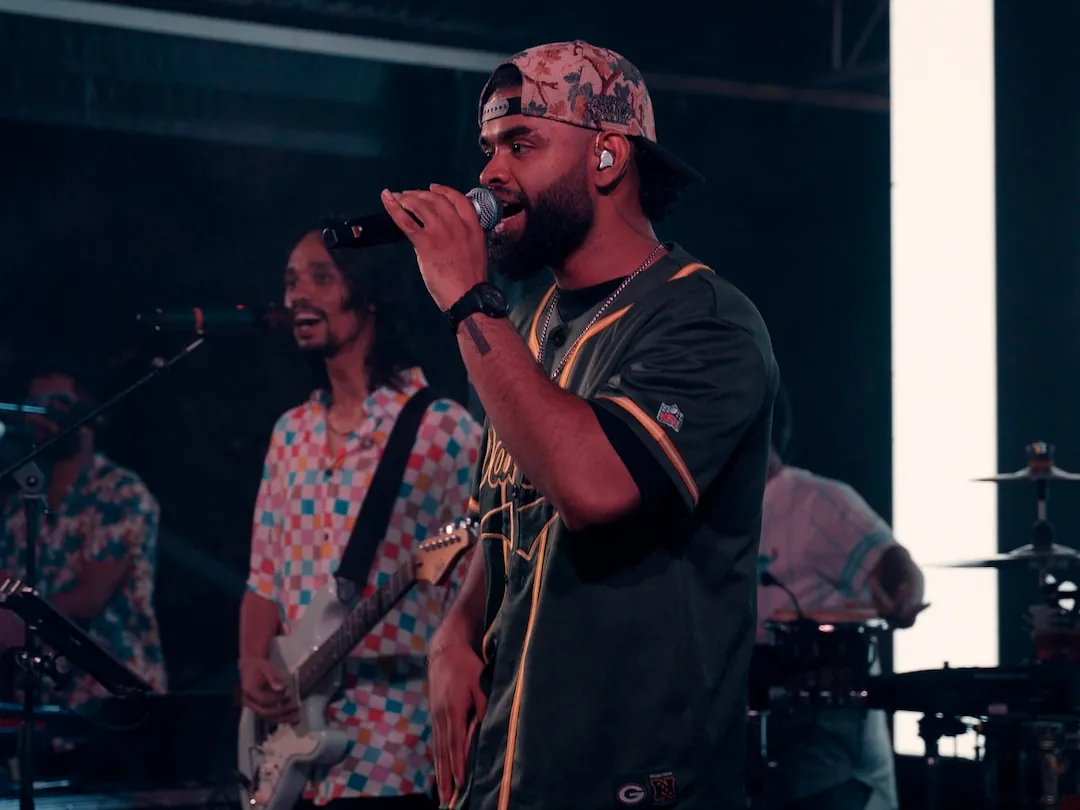
Infinity performed at TukTuk Wine and Dine for the first time during this event, and their arrival on stage immediately shifted the attention of the entire venue. Many guests were already familiar with their music, especially given the band’s strong following in Negombo, which made the response immediate and coordinated from different parts of the crowd.
The band consists of six members: Nifal, Ashene, Digayu, Chinthaka, Thisara, and Ameesha. Their music spans rap, hip hop, R&B, and country influences, which allows their live sets to move fluidly between high-energy sections and more melodic moments without losing continuity.
Infinity’s background includes supporting Bathiya and Santhush (BNS) as a backing band, along with major live appearances such as Sri Lanka’s first drive-in concert during the COVID-19 period. Their digital reach also reflects their growth, with a strong Spotify following and millions of views on their most popular YouTube releases.
On this night, their presence did not rely on introduction or buildup. The crowd response was already in place from the first moments of performance, suggesting recognition and anticipation carried over from their existing audience.
Guest Interaction and Crowd Behavior
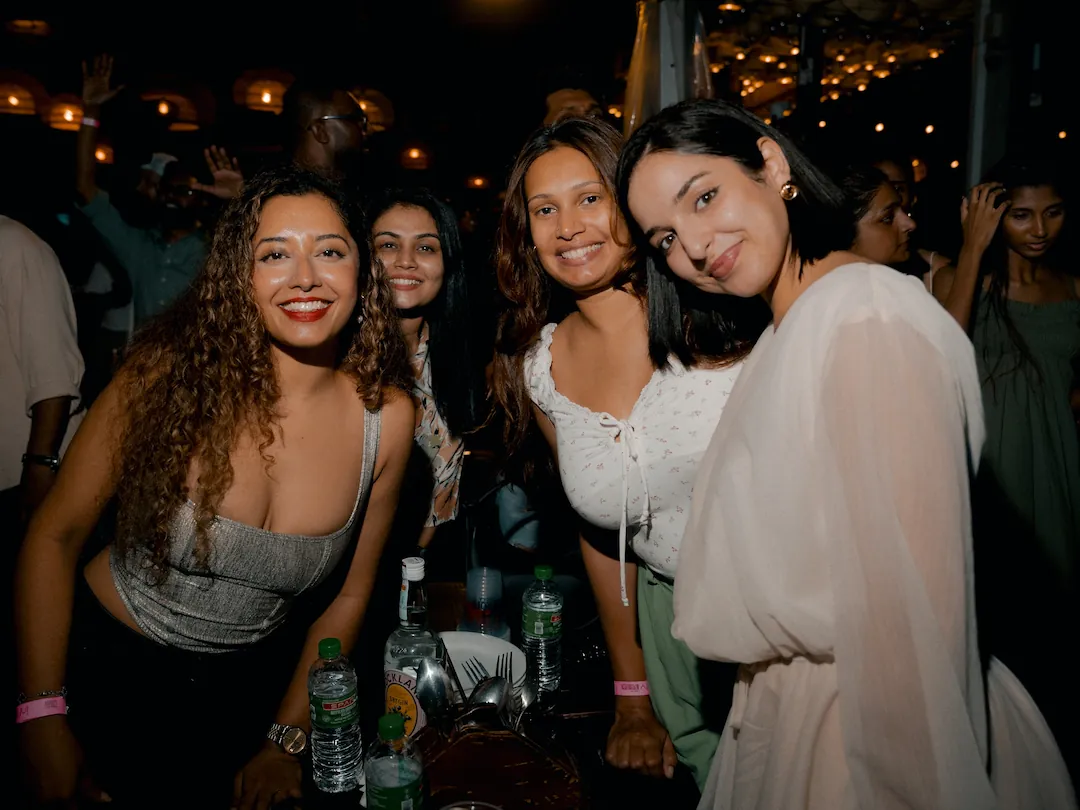
The crowd remained active throughout the evening in a mix of structured and spontaneous ways. Friends stayed within their groups but frequently shifted positions, either moving closer to the stage during stronger sections or returning to tables between songs.
Phones appeared regularly across the venue as guests recorded moments from the performance. These recordings were often triggered by specific reactions in the crowd or highlights in the music, rather than continuous filming. Short clips captured singing sections, crowd movement, and shared reactions within groups.
Within tables, rhythmic clapping and tapping became a natural response to certain tracks. These small movements created a shared rhythm between groups even when they were not directly interacting. Brief standing bursts also occurred across different parts of the venue, where groups would stand together during high-energy sections, engage for a moment, and then sit back down as the music transitioned.
Group toasts took place during mid-performance moments as well, blending into the flow of the music rather than interrupting it. Drinks were raised between friends during key sections, reinforcing the social rhythm of the night without shifting focus away from the stage.
Music as the Central Driver
Once Infinity began their set, the structure of the night shifted clearly toward the stage while still maintaining constant movement across the venue. The crowd reaction was immediate, particularly from guests familiar with the band’s music.
Songs triggered visible engagement across different sections of the space. Some groups moved closer to the stage, others remained seated but became more engaged through singing along or reacting to specific parts of the performance. The audience stayed involved continuously rather than observing passively.
The band’s ability to shift between genres allowed the energy to evolve naturally. High-energy sections increased movement across the floor and drew more people toward the stage, while softer transitions created brief pauses where conversation and regrouping happened before the next rise in intensity.
Singing along became more frequent as the set progressed, and applause often carried over into the next song rather than ending cleanly between tracks. This overlap created a continuous connection between audience and performance.
Energy Across the Venue
The energy inside the venue remained steady but expressed differently depending on location. Near the stage, the crowd was tightly packed and highly reactive, with frequent standing, movement, and direct engagement with the performance.
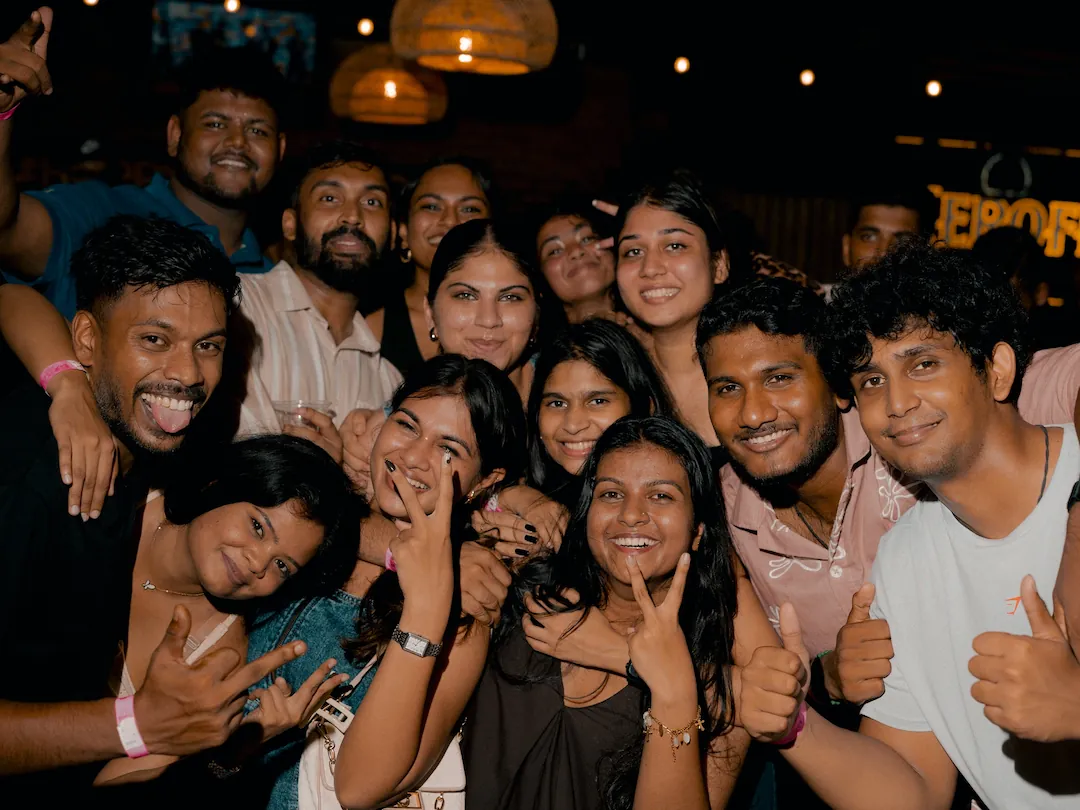
Further back, guests balanced attention between food, drinks, conversation, and the stage. Even in these areas, engagement remained consistent. The music acted as a constant reference point, shaping the rhythm of interaction across tables.
Despite differences in intensity, the venue functioned as a single connected environment. Reactions in one area often influenced movement in another, and the overall energy remained unified rather than segmented.
Sensory Layers of the Night
The atmosphere of the night was built from overlapping sensory elements that worked together rather than separately. The sound of live music formed the base layer, constantly supported by crowd reactions, conversation, and movement across the space.
The sound of glasses being placed on tables, brief bursts of laughter between groups, clapping in response to songs, and the steady flow of conversation all contributed to the environment. Drinks being refilled and passed between friends created short pauses in interaction that quickly reconnected with the ongoing performance.
These details did not dominate any single moment but together created a continuous sense of activity across the venue.
Build-Up and Peak Energy
The energy of the night developed gradually rather than through a single sharp peak. Early engagement from guests and initial reactions to the band created the foundation for what followed.
As the performance continued, engagement became more synchronized. Friends pulled each other closer to the stage during stronger sections, while others remained seated but became more actively involved through singing and rhythmic response.
At its peak, the crowd response became more unified across the venue. Singing increased, clapping became more coordinated, and movement aligned more closely with the rhythm of the performance. The separation between seated and standing areas became less distinct as more guests participated in the shared energy of the set.
Closing Movement
As the night moved toward its conclusion, the intensity softened gradually. Groups began to shift back into conversation while the performance continued winding down.
Movement across the venue slowed, but the social atmosphere remained active. Conversations continued across tables, and groups gradually dispersed rather than exiting at once. The transition from peak energy to closure happened naturally without a defined stopping point.
Final Reflection
Infinity Live at TukTuk Wine and Dine reflected how the venue operates as a shared environment where food, drinks, and live music exist within the same continuous space. The band’s first performance at the venue was met with immediate engagement, supported by a crowd already familiar with their music and responsive to their sound.
The night was defined by ongoing interaction rather than isolated moments. Guests moved between eating, drinking, reacting, and socializing without breaking the overall flow of the experience.
TukTuk functioned as a connected social music space throughout the evening, where tables acted as active gathering points and the stage remained a shared focus. The result was a steady, collective experience shaped by music, crowd behavior, and continuous engagement from start to finish.